
Skincare Guide
How to Build a Skincare Routine
A skincare routine is simpler than you think. Learn the essential steps, the right order to apply products, and why consistency matters more than complexity.
A skincare routine is simpler than you think. Learn the essential steps, the right order to apply products, and why consistency matters more than complexity.
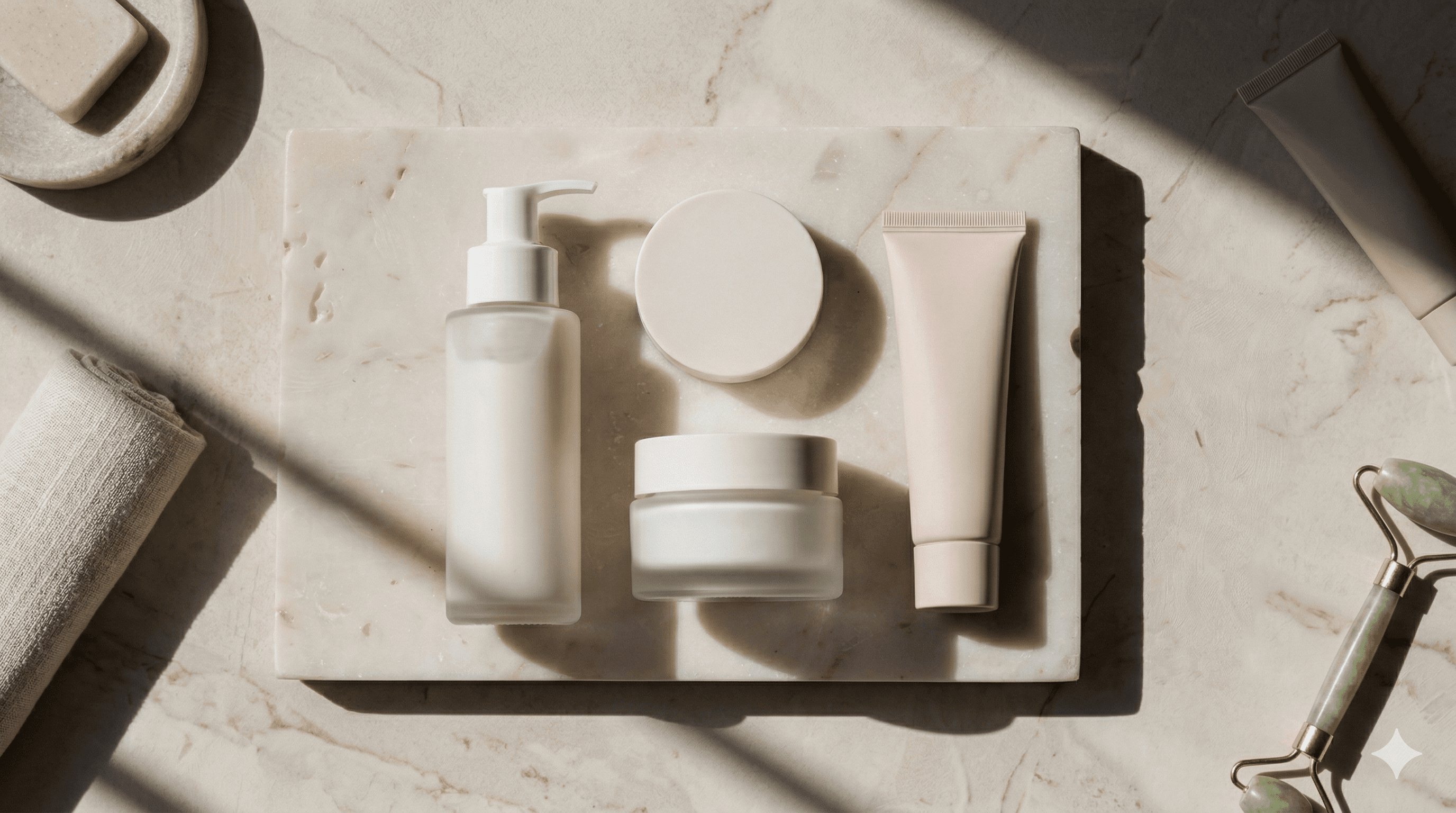
A skincare routine is a consistent sequence of steps you follow to cleanse, protect, and support your skin. It doesn't need to be complicated—in fact, simplicity is often more effective.
The goal is to remove daily buildup, deliver key ingredients your skin needs, and protect it from environmental stressors. When done consistently, a routine helps your skin stay balanced, calm, and resilient.
Most people don't need a 10-step routine. The American Academy of Dermatology recommends starting with the essentials — cleanser, moisturizer, and sunscreen — before adding targeted treatments.[1] A solid foundation typically includes just 3–5 products that address your specific skin needs.
If you're just starting, these three essentials form a complete skincare routine:
If you're starting from scratch, these three steps form the foundation of any healthy skincare routine:
Removes oil, dirt, makeup, and environmental buildup. Use morning and night with lukewarm water. Find a gentle option that doesn't leave your skin tight or uncomfortable—gel, cream, or oil formulas all work depending on your skin type.
Hydrates and supports your skin barrier. Apply to damp skin while it's still slightly wet to lock in moisture. Use morning and night. Choose a formula suited to your skin type—lightweight gels for oily skin, richer creams for dry skin.
Protects skin from UV damage. Apply as your final morning step. Use SPF 30 or higher and reapply if you're outdoors for extended periods. Sunscreen is the single most important anti-aging step you can take.
This 3-step routine is enough for many people. It cleanses, protects, and hydrates—everything skin needs to stay healthy.
Your morning routine should be quick and focused on preparing skin for the day ahead. Goal: cleanse, treat (optional), hydrate, and protect.
Pro tip: Morning routines should take 3–5 minutes. Keep it simple so you'll actually stick with it every day.
Your night routine can be slightly more involved since you're not heading out into the sun. This is when many people use treatment products like retinoids or actives. Goal: cleanse thoroughly, treat, and deeply hydrate.
Why night is for actives: Your skin repairs and regenerates while you sleep, making nighttime the ideal window for active ingredients like retinol. No sun exposure means fewer interaction concerns.
The basic rule of layering is simple: apply products from lightest to thickest textures. This ensures each product absorbs properly and works effectively.
Absorption tip: Wait 1–2 minutes between layers, especially after serums or actives. This gives each product time to absorb and work properly before adding the next layer.
Cleanse, moisturize, sunscreen (AM) is a complete routine. Don't feel pressured to use 10 products. More doesn't equal better results.
Wait 1–2 weeks between adding new products. This helps you identify what actually works for your skin and what causes reactions.
Results take time. Most skincare products need 4–8 weeks of consistent use before you notice a significant change. Stick with your routine.
Exfoliating 1–2 times per week is enough for most people. Over-exfoliating damages your skin barrier and causes sensitivity.
UV protection is the foundation of healthy skin and anti-aging. Use it every single day, even when it's cloudy.
Before applying a new product to your entire face, test it on a small area (like behind your ear or on your jawline) to check for irritation.
If
you have acne-prone skin
Use a non-comedogenic gel cleanser + oil-free gel moisturizer. Add salicylic acid 0.5–2% only after 4 stable weeks
Because: occlusive ingredients in rich creams increase comedone formation; BHA (salicylic acid) penetrates the follicle wall to dissolve sebum plugs, but only introduce it once the baseline routine is confirmed tolerable
If
you have dry or eczema-prone skin
Use a cream or micellar cleanser (no surfactants) + ceramide-rich moisturizer applied twice daily
Because: surfactant-based cleansers strip the skin's natural lipid barrier; ceramides restore the lipid-protein matrix that prevents transepidermal water loss in compromised skin
If
you have oily skin and want to skip moisturizer
Use a lightweight gel moisturizer with niacinamide — don't skip
Because: oily skin often overproduces sebum as a compensatory response to dehydration; niacinamide regulates sebum output while a gel formula adds hydration without occlusion
If
you are over 35 and want anti-aging benefits
Establish the 3-step baseline for 4 weeks, then add retinol (PM) as the sole new element
Because: introducing retinol into an unstable or new routine produces confounded skin responses; baseline stability reduces irritation risk from the active
If
you have sensitive or reactive skin
Maintain only 3 steps for a minimum of 8 consecutive weeks before adding any active treatment
Because: sensitive skin requires longer barrier stabilization time before it can process actives without disproportionate reactivity
The benefit of a more complex routine is faster or more targeted results for specific concerns. The cost is harder consistency, higher chance of reaction, and difficulty isolating what's working. For most people, the 3-step routine produces 80% of the benefit at 20% of the complexity.
| Factor | 3-Step Routine | 5–10-Step Routine |
|---|---|---|
| Long-term consistency | Easier to maintain daily | Often abandoned under time pressure |
| Results for specific concerns | Sufficient for general health | Faster for acne, aging, pigmentation |
| Reaction tracking | Easy — few variables | Difficult — reactions hard to isolate |
| Monthly cost | $15–$50 | $50–$200+ |
Beginner-friendly routines, ingredient explainers, and product guides — without the overwhelm.
Building a skincare routine doesn't require an overhaul. The foundation — cleanser, moisturizer, and sunscreen — is genuinely sufficient for most people. Add treatments or actives only when your skin is stable and you have a specific concern to address.
When in doubt, simplify. A 3-step routine done consistently every day delivers better results than a 10-step routine done sporadically. Your skin will thank you for the patience.
Your skincare routine starts with the basics. Browse our product guides below to find gentle cleansers, effective moisturizers, and quality sunscreen suited to your skin type.
Each product guide includes detailed reviews, comparisons, and ingredient breakdowns to help you choose what's right for your skin.